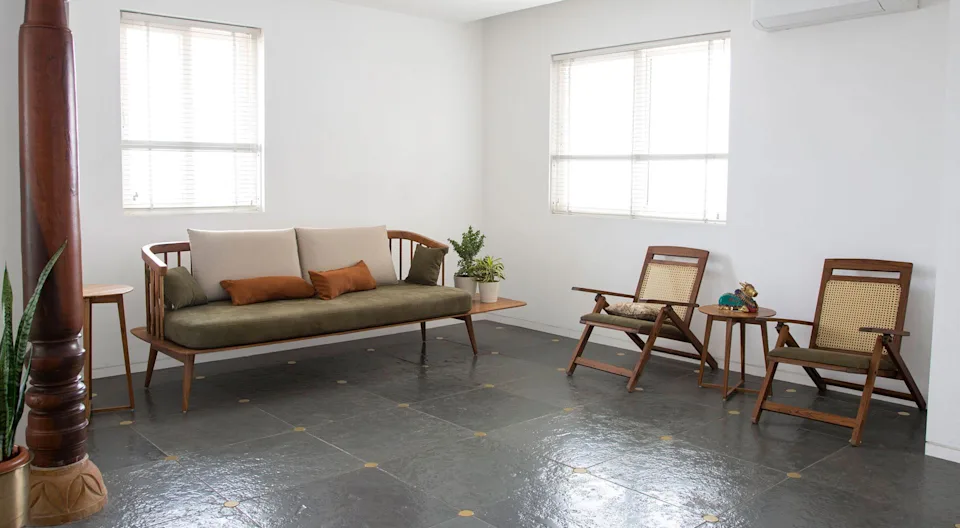
True spiritual abundance in interior design is rarely measured by material accumulation. Instead, it reflects an intentional mindset—one that strips away the superfluous to cultivate a simpler, richer everyday life. In India, where domestic aesthetics have long celebrated vivid color palettes, ornate patterns, and opulent textures, western-style stark minimalism has often felt foreign and sterile.
Challenging this convention, Indian architectural studio Design Experiment demonstrates that minimalism does not have to mean sterile monochrome. By embedding vernacular elements and regional materials into a contemporary spatial framework, the studio created a serene residential sanctuary that feels both radically clean and warmly human.
The Cultural Dilemma: Bridging Stark Geometry and Vibrant Identity
For many homeowners in modern Indian metropolises, returning to the urban core brings a desire for quiet retreat from outside sensory overload. Yet, imported minimalist templates—dominated by clinical white drywall, polished chrome, and devoid of tactile memory—frequently clash with the deep emotional warmth central to Indian family life.
Design Experiment approached this residence not as a rigid exercise in subtraction, but as a deliberate dialogue between contemporary spatial efficiency and indigenous craftsmanship. The core design philosophy centers on retaining generous negative space while letting raw, locally sourced textures define the home’s emotional temperature.
Core Design Strategies: Crafting Warm Minimalism
- Material Honesty Over Synthetic Finishes: Rather than relying on glossy laminates or ornamental moldings, the residence embraces natural timber, unadorned stone, lime-washed surfaces, and breathable fabrics. These organic materials age gracefully, providing subtle textural variations that catch daylight throughout the day.
- Ancestral Heirlooms as Spatial Anchors: One of the home’s defining centerpieces is a traditional wooden swing (jhula) carried over from the clients’ ancestral home. Strategically suspended between the living zone and the balcony, the swing serves as a subtle spatial divider and a daily gathering spot, grounding the minimalist envelope in generational memory.
- Curated Voids and Unobstructed Sightlines: Walls were selectively opened to maximize cross-ventilation and natural daylight. By designing custom hidden storage solutions throughout the perimeter, horizontal surfaces remain free of clutter, allowing light and shadow to serve as dynamic, ever-changing decorative elements.
- A Tactile, Earth-Toned Palette: Soft sandy beiges, warm muted terracottas, and rich wood grains replace the clinical cool greys common in European minimalism, ensuring the interior feels welcoming, grounded, and intrinsically connected to its climate.
The Evolution of Modern Indian Living
This residence reflects a broader shift across global architecture toward “warm minimalism”—a design ethos that recognizes simplicity not as an aesthetic trend, but as an antidote to modern distraction.
By grounding contemporary, decluttered architecture in vernacular craftsmanship and sentimental heritage, Design Experiment proves that modern Indian homes can honor cultural identity without descending into visual excess. True minimalism is not about living with as little as possible; it is about making space for what truly matters.